Most people buy a microwave the way they buy a phone charger. They check the price, glance at the litres, and assume the rest does not matter much. That assumption falls apart the first time a microwave struggles to heat a full plate evenly, or stops working after one too many summer voltage spikes. This microwave oven buying guide skips the generic checklist approach and explains why certain specs matter and others are mostly marketing noise.
The Real Problem With Most Microwave Oven Buying Guide Advice
Almost every microwave buying article online repeats the same three points: pick a capacity, pick a function, check the price. None of that actually explains why two microwaves with identical specs can perform completely differently in a real kitchen. The honest answer involves the magnetron, the cavity shape, and how evenly a model distributes microwaves. None of these show up clearly on a price tag.
A standard microwave heats food using a magnetron that generates electromagnetic waves at a fixed frequency. Cheaper units run that magnetron at full power and cycle it on and off to simulate lower power settings. This is why a budget microwave on 30 percent power still produces uneven hot spots in a bowl of daal. Better-engineered models, including most convection and inverter designs, modulate the magnetron output continuously instead of switching it on and off.
This single difference explains why two 30-litre microwaves at similar prices can behave very differently with the same dish. Demand for this kind of feature-aware buying is rising steadily. According to Statista, per-household revenue in Pakistan’s small appliances market is projected to reach USD 44.31 in 2025, with 2.4 percent volume growth expected in 2026. That steady curve suggests Pakistani buyers are researching more carefully before purchasing, not just grabbing whatever is on sale.
Why Turntable Versus Flatbed Design Actually Matters
Most microwaves still use a rotating glass turntable to spin food through the wave pattern for even heating. Flatbed designs, increasingly common in newer models, use a stationary tray with a redesigned wave guide instead. Flatbed units fit larger dishes since there is no rotation radius to account for. They also tend to handle large rectangular dishes, like a tray of biryani, more evenly than a spinning turntable can.
>> Related Post: Top Baking Ovens for Home in Pakistan for 2026
Microwave Oven Features That Actually Matter in a Buying Guide:
Once the mechanics are clear, the features worth comparing become much more specific. This section focuses on the decisions that actually change daily cooking outcomes, not generic spec sheet items.
1. Capacity Needs to Match Dish Shape, Not Just Family Size
Family size advice usually stops at litres, but dish shape matters just as much. A 25-litre cavity that is wide and shallow fits a round biryani dish better than a tall, narrow 30-litre unit. Households that frequently reheat large flat dishes, like a full tray of karahi, should check internal cavity dimensions directly. Litre capacity alone can be misleading if the cavity shape does not suit your actual cookware.
2. Grill Coils Versus True Convection Fans
A grill function uses a heating coil at the top of the cavity, similar to a small broiler. Convection adds a fan that circulates hot air, which is what actually allows baking rather than just browning. Many mid-range models advertise grill and bake when they only have a grill coil and no fan. If baking cakes or roasting a whole chicken matters to you, confirm the model has an actual convection fan, not just a grill element.
>> Related Post: Top 5 Best Oven Brands in Pakistan for 2026
Why Inverter Microwaves Cost More and Sometimes Are Not Worth It
Inverter technology allows continuous power modulation instead of on-off cycling, which improves cooking evenness significantly. It also tends to extend the magnetron lifespan since it is not constantly switching at full power. However, inverter models cost noticeably more and the benefit is most noticeable on delicate tasks like melting chocolate or defrosting fish. For straightforward reheating of rotis and curries, a well-built standard magnetron model performs nearly as well.
Built-In Versus Countertop: A Cabinetry Decision, Not Just a Style One
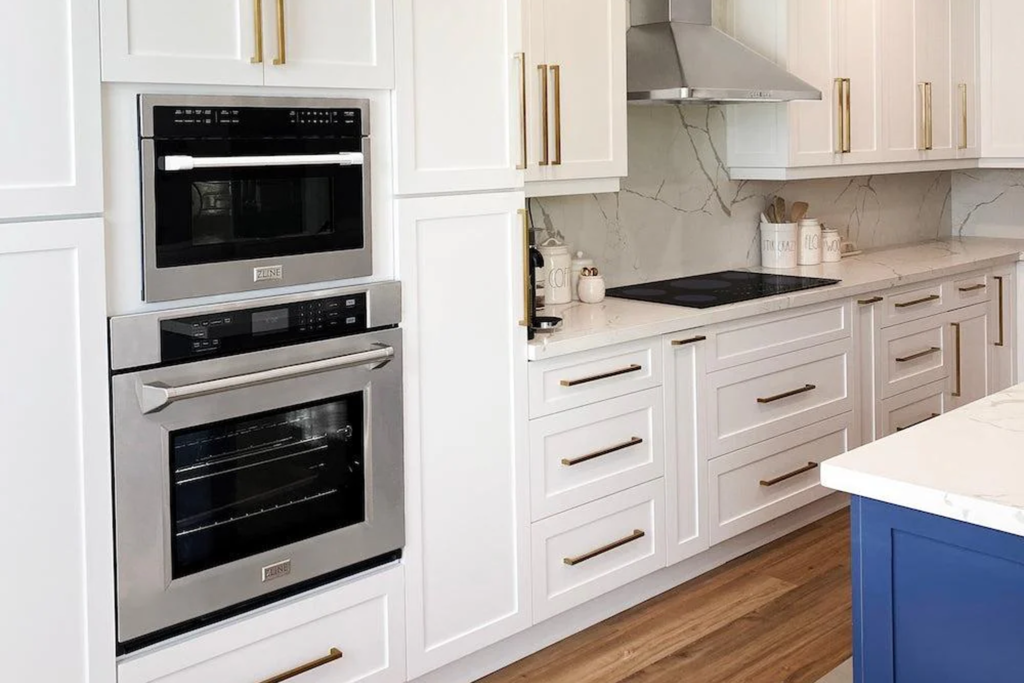
Built-in models, like Vestel’s frameless microwave oven, require a pre-cut cabinet space matching standard installation dimensions. Retrofitting an existing kitchen for a built-in unit can mean carpentry work beyond just the appliance cost. Countertop models need zero installation but do take up visible counter space permanently. If you are mid-renovation, built-in is worth planning for early rather than as an afterthought.
Voltage Protection Details That Salespeople Rarely Mention
Touch panel control boards are more vulnerable to voltage spikes than basic dial-controlled units. Some higher-end models include built-in surge protection circuits, though this is rarely advertised prominently. Asking specifically about surge protection, rather than just voltage range, gets a more useful answer from sales staff. Pairing any digital microwave with a household stabilizer remains the safer long-term choice regardless of the brand.
>> Related Post: Top Microwave Ovens in Pakistan for 2026
Microwave Oven Buying Guide: What to Actually Buy in Pakistan in 2026:
Vestel Pakistan’s Built-In Microwave Range
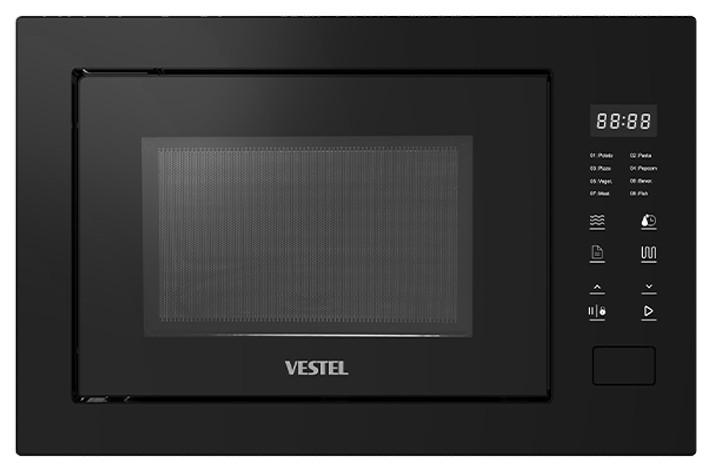
Vestel currently sells two built-in models, both designed for cabinet installation rather than countertop placement. The Frameless Built-in Microwave Oven VMW-30 offers 30 litres of capacity with a grill coil and full touch control. Its frameless black glass front is built specifically to sit flush with modular cabinetry rather than stand out as a separate unit.
How the Two Vestel Models Actually Differ
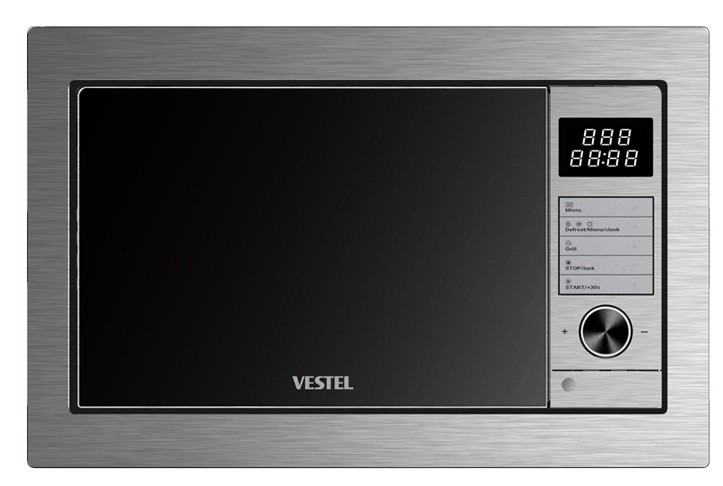
The companion Built-in Grill Microwave Oven BMW-30D1X shares the same 30-litre capacity but swaps full touch control for combined touch and dial controls. The dial controls make it slightly more forgiving for households without a dedicated stabilizer. Choosing between the two comes down to control preference and finish, not capacity or core function.
Where Haier and PEL Fit, and Where They Do Not
Haier and PEL both sell mid-range microwaves with grill coils, generally without true convection fans. They suit households focused purely on reheating and light grilling rather than baking. Buying decisions between these brands should hinge on local service centre proximity, not national advertising. A slightly pricier model backed by a nearby service centre often outperforms a cheaper one with thin local support.
>> Related Post: Microwave Oven Types Perfect for Pakistani Kitchens in 2026
Why Vestel Pakistan Fits This Microwave Oven Buying Guide
The mechanics covered earlier point toward a clear standard: even heat distribution, real cabinet-grade build quality, and dependable controls. Vestel Pakistan‘s built-in models are designed around that standard rather than around marketing checklists. The frameless cabinet fit and calibrated touch controls reflect engineering choices, not just aesthetic ones. That distinction matters more once the appliance is a few years into daily use.
For anyone exploring the full range of microwave oven features available in Pakistan, Vestel’s catalogue is a strong starting point.
>> Ready to compare specs side by side? Browse Vestel Pakistan’s full microwave oven lineup.
FAQs
1. Why do two microwaves with the same wattage heat food differently?
Wattage alone does not determine how evenly a microwave heats food. Cheaper magnetrons cycle on and off to simulate lower power settings. This creates uneven hot spots in dishes like daal or karahi. Better-engineered or inverter models modulate power continuously instead of switching fully on and off. The result is noticeably more even heating across the entire dish.
2. Is a turntable or flatbed design better for Pakistani cooking?
Turntable designs rotate food through the wave pattern using a spinning glass plate. Flatbed designs use a stationary tray with a redesigned wave guide for even heating. Flatbed units generally fit larger rectangular dishes better since there is no rotation radius limit. For dishes like a full tray of biryani or karahi, flatbed designs tend to heat more evenly.
3. What is the real difference between a grill coil and true convection?
A grill coil is simply a heating element at the top of the cavity for browning. True convection adds a fan that circulates hot air, enabling actual baking rather than browning alone. Many advertised grill and bake models only include a grill coil without a fan. Confirming the presence of a fan matters if baking cakes or roasting meat is a priority for your household.
4. Are inverter microwaves worth the extra cost in Pakistan?
Inverter technology allows continuous power modulation instead of repeated on-off cycling. This improves cooking evenness, especially for delicate tasks like melting chocolate or defrosting fish. The added cost is harder to justify if your main use is reheating rotis and curries daily. A well-built standard model often performs nearly as well for straightforward everyday reheating.
5. Does a built-in microwave require a kitchen renovation?
Built-in models need a pre-cut cabinet space matching standard installation dimensions. Retrofitting an existing kitchen for a built-in unit can require carpentry work beyond the appliance cost itself. Countertop models avoid this entirely, requiring zero structural changes to install. Planning for a built-in unit early during any renovation avoids unexpected installation costs later.
6. How vulnerable are digital microwaves to Pakistan’s voltage fluctuations?
Touch panel control boards are generally more sensitive to voltage spikes than basic dial controls. Some higher-end models include surge protection circuits, though this detail is rarely advertised clearly. Asking specifically about surge protection during purchase gets a more useful answer than asking about voltage range alone. Pairing any digital microwave with a household stabilizer remains the safer long-term approach.
7. Why does cavity shape matter more than litre capacity alone?
Litre capacity describes total volume but says nothing about cavity shape or dish fit. A wide, shallow cavity suits round dishes like biryani trays better than a tall, narrow one of the same capacity. Households that regularly reheat large flat dishes should check actual cavity dimensions before buying based on litres alone. This is one of the most overlooked details in standard microwave oven buying guide advice.
8. Where can I buy a verified microwave oven online in Pakistan?
Vestel’s built-in models are available directly through the Vestel Pakistan microwave collection. Orders can also be placed conveniently through WhatsApp for a faster response time.
Related Posts