Buying a refrigerator sounds simple enough until you are standing in a showroom, looking at a model you love, and realizing you have no idea whether it will actually fit in your kitchen. This happens more often than people expect, and it is almost always because fridge dimensions were an afterthought rather than the starting point.
This refrigerator buying guide is here to change that. Whether you are upgrading an old unit, moving into a new home, or building a kitchen from scratch, understanding the sizes of refrigerators available in 2026 will save you time, money, and the very real frustration of a delivery-day return.
>> Related Post: 5 Most Popular Refrigerator Types for Homes in Pakistan
Why Fridge Sizes Matter More Than Ever in Your Refrigerator Buying Guide
Your kitchen layout dictates your first move
Before you look at a single product specification, measure your kitchen opening. The width, height, and depth of your available space are your non-negotiables. Everything else, including capacity, style, and features, comes after those numbers.
A common mistake Pakistani homeowners make is falling in love with a large French door model at a showroom, only to find it does not clear the kitchen doorway or blocks a cabinet from opening. Getting the fridge dimensions right from the start prevents all of that.
How household size connects to fridge capacity
A good rule of thumb used by appliance experts is to plan for 4 to 6 cubic feet of fridge space per adult in your household. A couple needs roughly 8 to 12 cubic feet, while a family of four is more comfortable with 18 to 25 cubic feet. In Pakistani households where cooking is frequent and in bulk, leaning toward the higher end of that range almost always makes sense.
Fortune Business Insights projects the global refrigerator market to grow from USD 82.33 billion in 2026 to USD 139.98 billion by 2034, driven by rising demand for larger-capacity and smarter appliances. More choice is great for buyers, but it also means more ways to pick the wrong size if you are not paying attention.
>> Related Post: Best Single Door Refrigerators to Buy in Pakistan for 2026
A Complete Refrigerator Buying Guide to Fridge Dimensions and Sizes of Refrigerators
Understanding how fridge dimensions are measured and what the different sizes of refrigerators actually mean in practice is the foundation of a smart purchase. Here is everything you need to know before you buy.
Standard fridge sizes: what the numbers actually mean
There is no single universal standard, but most full-size refrigerators fall within a predictable range. According to Maytag’s refrigerator sizing guide, standard fridge dimensions range from 24 to 40 inches in width, 62 to 72 inches in height, and 29 to 36 inches in depth, with exact figures varying by configuration and brand.
Width, height, and depth explained
Width is the most critical measurement because it determines whether the refrigerator fits your cabinet opening. Most standard models sit between 24 and 36 inches wide, with the widest French door and side-by-side units reaching up to 40 inches.
Height typically falls between 61 and 72 inches. Always account for overhead cabinets and leave at least one inch of clearance at the top for ventilation. Depth ranges from 28 to 36 inches for standard-depth models, while counter-depth refrigerators sit between 24 and 30 inches to align flush with countertops.
Always add at least half an inch of clearance on each side and one to two inches at the top for proper airflow. Skipping the ventilation space is one of the most common installation mistakes, and it shortens the appliance’s lifespan considerably.
Fridge sizes by type: which style fits which home
1. Top-freezer refrigerators
These are the classic workhorses of Pakistani kitchens. They typically measure 24 to 33 inches wide, 61 to 69 inches tall, and 28 to 35 inches deep. Capacity generally sits between 10 and 21 cubic feet. They are reliable, energy-efficient, and fit comfortably in most standard kitchen openings.
2. Bottom-freezer refrigerators
Bottom-freezer models share similar overall fridge dimensions to top-freezers, ranging from 29 to 36 inches wide and 67 to 70 inches tall. The key difference is that the fresh food compartment sits at eye level, making everyday use more ergonomic. Capacity is typically between 18 and 25 cubic feet.
3. Side-by-side refrigerators
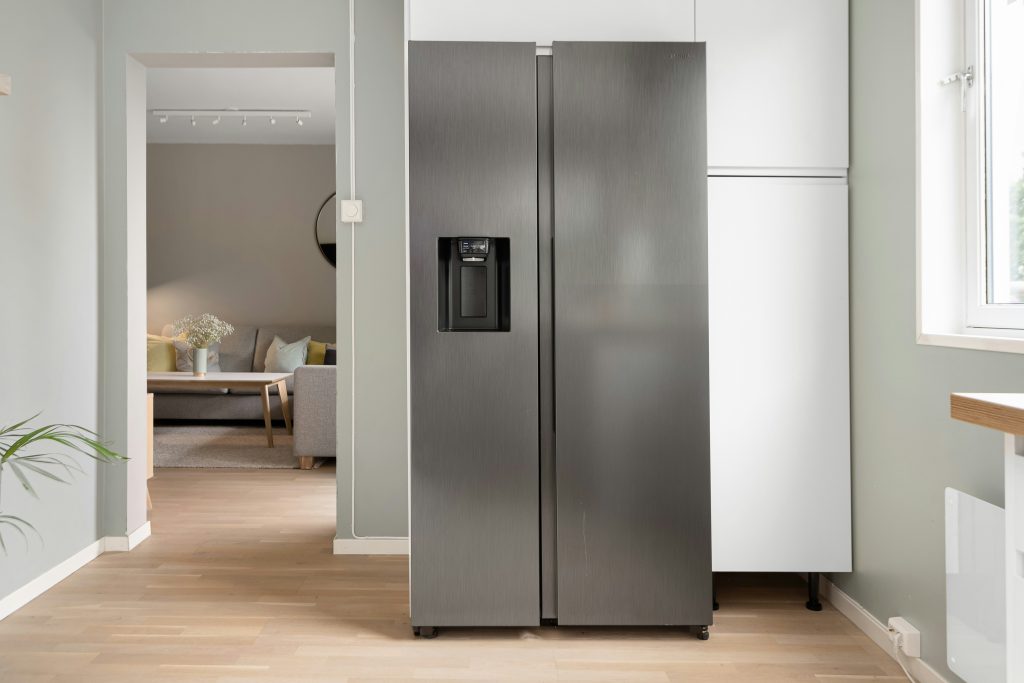
These are wider models, usually 35 to 36 inches across, sitting between 65 and 72 inches tall. The fridge and freezer run alongside each other vertically, which means neither compartment is particularly wide. They work well if you access the freezer often, but are not ideal for storing large platters or wide frozen items.
4. French door refrigerators
French door models are among the most popular sizes of refrigerator for modern homes. They typically range from 29 to 36 inches wide and 68 to 70 inches tall. They offer a wide fresh food section with a pull-out freezer drawer below. Capacity ranges from 20 to 28 cubic feet, making them an excellent fit for families who cook frequently.
5. Built-in and counter-depth refrigerators
Counter-depth models sit flush with your countertops, measuring around 24 to 30 inches deep instead of the standard 30 to 36 inches. They look sleek and integrated. But, that shallower depth does reduce interior capacity compared to standard-depth models of the same width. If a seamless kitchen aesthetic matters to you, this trade-off is often worth it.
How to measure your space the right way
Measuring once and ending up with a refrigerator that does not fit is a frustrating and entirely avoidable experience. Start by measuring the width of the opening from wall to wall or cabinet to cabinet. Then measure the height from the floor to the bottom of any overhead cabinets. For depth, measure from the back wall to the front edge of your countertop.
Once you have those three numbers, subtract at least half an inch from the width and depth, and at least one inch from the height, to ensure the fridge sits comfortably with room to breathe. One more thing people often forget: measure the pathway from your front door to the kitchen. Your new refrigerator needs to make it through doorways, around corners, and past any obstacles before it ever reaches its final spot.
>> Related Post: Built-In vs Freestanding Fridge: Key Differences Every Buyer Should Know
Your Refrigerator Buying Guide to Choosing the Right Fridge Sizes for Pakistani Homes
Pakistani kitchen layouts vary considerably, from narrow galley kitchens in apartments to wide, open-plan cooking areas in larger homes. The right fridge size depends on both your physical space and how you actually use your kitchen.
The global refrigerator market is valued at USD 53.95 billion in 2026 and is projected to reach USD 66.47 billion by 2030, with demand in Asia Pacific markets, including Pakistan, driven by urbanization and rising household incomes. Buyers today have more options than ever, which makes a structured refrigerator buying guide more useful than ever.
Small households and apartments: compact fridge sizes that work
For apartments, studio flats, and households of one to two people, compact fridge sizes in the range of 24 inches wide and 10 to 16 cubic feet of capacity are the practical choice. These models fit into tighter kitchen openings without sacrificing too much storage. A single-door refrigerator or a compact top-freezer model typically covers this need well.
If you are browsing options for a smaller space, the best single-door refrigerators in Pakistan offer a useful starting point for compact households looking for efficient, right-sized cooling.
Large families: what fridge dimensions actually give you enough room
For families of four or more, the target is generally a refrigerator with 20 to 25 cubic feet of total capacity. In terms of fridge dimensions, that typically means a model that is 33 to 36 inches wide and at least 68 inches tall. French door and bottom-freezer configurations work particularly well for large families because they provide wide fresh food sections at easy reach.
Pakistani cooking styles, which often involve preparing large quantities of food, storing leftovers, and keeping fresh produce for the week, benefit from refrigerators with well-organized interior layouts and generous vegetable drawers. Capacity alone is not enough if the interior shelving does not accommodate large pots and wide trays.
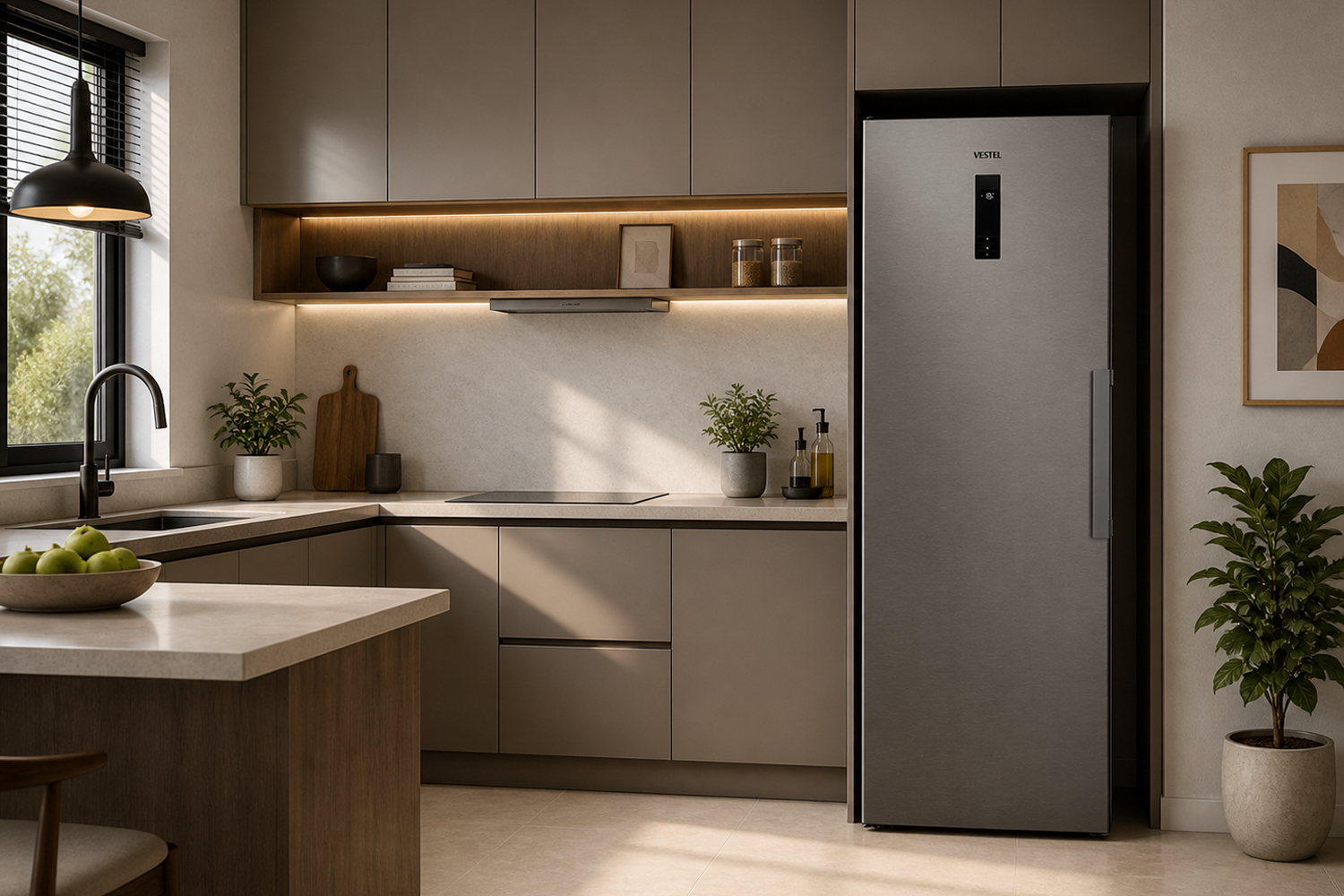
If your household needs a high-capacity solution, take a look at the Vestel No Frost Free Standing Fridge, which combines generous capacity with no-frost technology and a freestanding design suited to most Pakistani kitchen layouts.
>> Related Post: No Frost vs Frost Fridge: Pros, Cons, and Key Differences
Why Vestel Refrigerators Are Built For Pakistani Kitchens: Refrigerator Buying Guide 2026
Vestel is a Turkish appliance manufacturer with decades of experience building home appliances for diverse markets. Their refrigerator range available in Pakistan covers everything from compact built-in models to large freestanding units, giving buyers genuine flexibility based on their kitchen size and household needs.
The Vestel range includes models with no-frost technology, adjustable shelving, and energy-efficient compressors, all of which matter in a climate like Pakistan’s, where refrigerators run around the clock. Whether you are looking for a compact fridge for an apartment or a full-size model for a large family home, the range at Vestel Pakistan’s refrigerator collection is worth exploring before you make your final decision.
>> Looking for the right size? Browse VESTEL Refrigerators and find the perfect fit for your kitchen.
FAQs: Refrigerator Size Guide in 2026
1. What is the standard size of a refrigerator?
Most standard full-size refrigerators measure between 24 and 40 inches wide, 61 to 72 inches tall, and 28 to 36 inches deep. The exact fridge dimensions depend on the configuration, with French door and side-by-side models sitting at the wider and taller end of that range, while top-freezer and compact models are smaller.
2. How do I choose the right refrigerator size for my family?
A reliable rule of thumb in this refrigerator buying guide is to plan for 4 to 6 cubic feet of storage per adult in your home. A family of four typically needs 18 to 25 cubic feet. If your household cooks frequently or shops in bulk, lean toward the higher end of that range to avoid running out of space.
3. What are the different fridge sizes available?
Fridge sizes broadly fall into three categories: compact models around 24 inches wide with 10 to 16 cubic feet of capacity, mid-size models around 30 to 33 inches wide with 18 to 22 cubic feet, and large models 33 to 36 inches wide with 22 to 28 or more cubic feet. Built-in and luxury models can go even wider, up to 48 inches, for high-capacity kitchen setups.
4. What is a counter-depth refrigerator, and how do its fridge dimensions differ?
A counter-depth refrigerator is designed to sit flush with your kitchen countertops, typically measuring 24 to 30 inches deep compared to the 30 to 36 inches of a standard-depth model. The trade-off is that a shallower depth usually means slightly less interior capacity. For kitchens where appearance and flow matter, the cleaner look is often worth it.
5. How much clearance do I need around my refrigerator?
Leave at least half an inch on each side and at least one inch at the top for proper airflow and ventilation. Refrigerators generate heat while running, and without clearance space, that heat cannot escape, which puts extra strain on the compressor and shortens the appliance’s lifespan. Always check the manufacturer’s specific recommendations for the model you choose.
6. What fridge sizes work best for Pakistani apartments?
For most Pakistani apartments, a compact to mid-size refrigerator is the practical choice. Look for models that are 24 to 30 inches wide with a capacity between 10 and 18 cubic feet. Single-door and top-freezer models are particularly well-suited for narrow kitchen spaces because their fridge dimensions are more compact without sacrificing basic functionality.
7. Does a bigger refrigerator always mean better?
Not necessarily. A refrigerator that is too large for your kitchen creates awkward layouts, obstructs cabinet doors, and wastes energy cooling unused space. A refrigerator that is too small leads to overcrowding and poor food preservation. The right size is the one that matches both your available kitchen space and your actual storage needs, which is exactly what a good refrigerator buying guide helps you figure out.
8. What is the difference between top-freezer and bottom-freezer refrigerators in terms of fridge dimensions?
Top-freezer and bottom-freezer models share similar overall fridge dimensions, typically 23 to 36 inches wide and 61 to 70 inches tall. The difference is in the internal layout. Top-freezer models are often more affordable and compact, while bottom-freezer models put fresh food at eye level for easier daily access. Both are solid choices for small to medium-sized Pakistani kitchens.
9. How do I measure my kitchen to find the right refrigerator size?
Measure the width of the opening from wall to wall or cabinet to cabinet then the height from the floor up to any overhead cabinet or obstruction. Lastly, measure the depth from the back wall to the front edge of your counter top. Subtract at least half an inch from the width and depth and one inch from the height for ventilation clearance. Also measure doorways and hallways so you know the fridge can actually be delivered and installed without issues.
10. Which Vestel refrigerator is the right fit for a large Pakistani household?
For large Pakistani families, the Vestel No Frost Free Standing Fridge at 390 litres offers generous capacity, no-frost technology that eliminates manual defrosting, and a freestanding design that fits most standard kitchen openings. Vestel’s refrigerator range in Pakistan covers multiple sizes and configurations, making it easy to find a model that matches your specific fridge dimensions and household needs.
Related Posts